
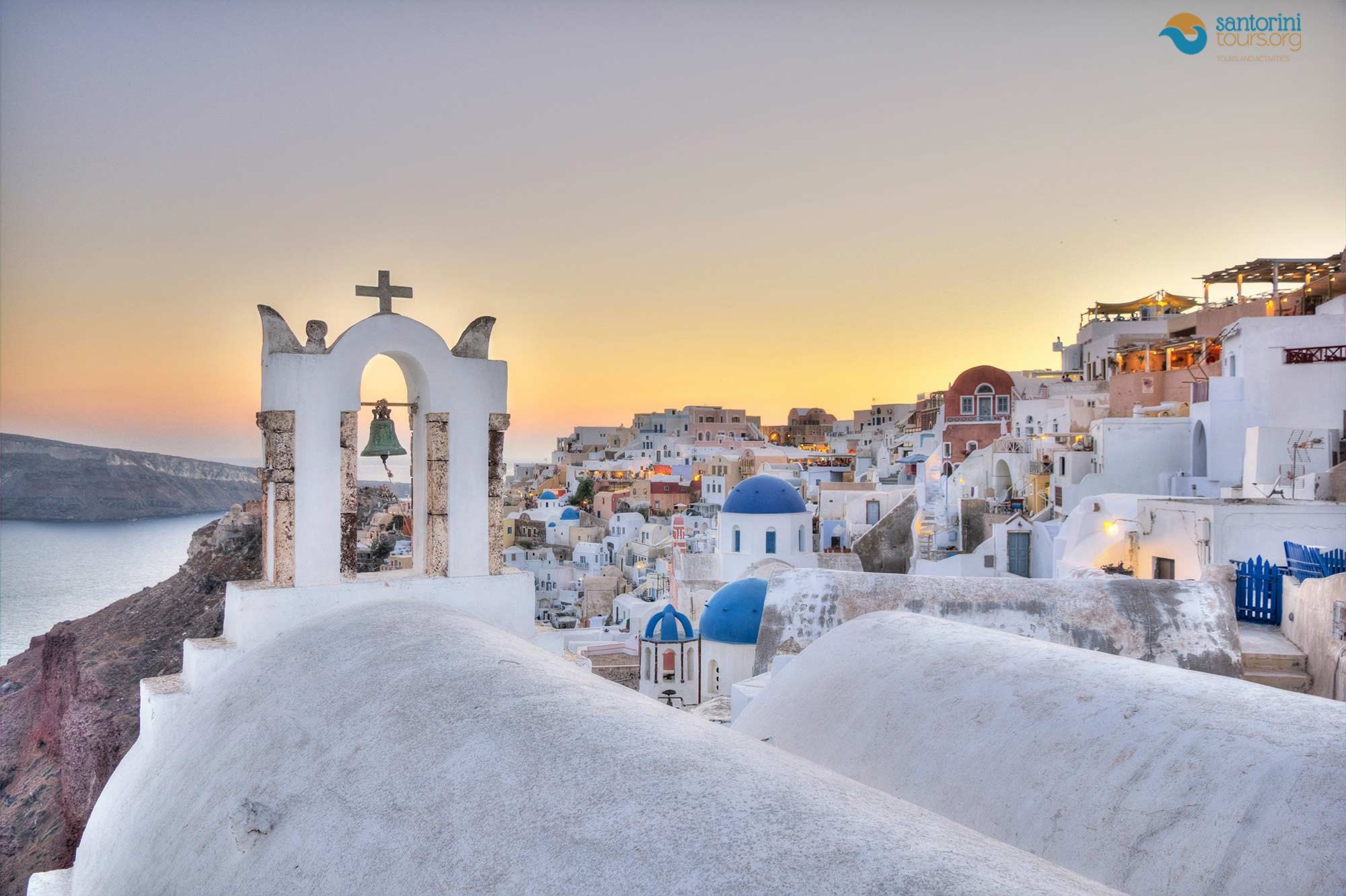
Nobody arrives on Santorini unprepared for how it looks. The caldera, the whitewashed villages and the sunset are among the most photographed things on earth, and the images are accurate. What catches first-time visitors is everything the images leave out: the scale of the crowds, the vertical geography, the distances that take twice as long as they should, and how much of the island exists away from the rim.
This is the orientation guide for a first visit. What the island actually is, what santorini tours cover, how long you need, what to book and what to skip, written for someone who has not been before and wants to arrive already knowing how the place works.
For travellers planning the island, santorini tours and santorini tours offer expertly guided experiences across Santorini — from caldera sunsets and volcano walks to private wine tastings and tailor-made sightseeing.
What Should First-Timers Know About Santorini Tours?
That the island is small in distance and slow in practice, and that timing matters more than routing.
For santorini tours the island is eighteen kilometres long. It looks like a morning’s drive on a map and takes a full day to see properly, because there is one main road, a handful of pinch points, and villages built vertically into a cliff where every stop involves stairs and a parking problem.
The second thing santorini tours work around is the crowd curve. Light until ten, heavy from eleven to two, easing until four, then compressing hard into the sunset window. Good santorini tours are built around that curve rather than around the map, which is why the best itineraries look counter-intuitive on paper.
What Do Santorini Tours Show You About The Island?
A crescent of volcanic cliff around a flooded crater, with villages along the rim and farmland behind them.
The landscape santorini tours cover is the result of a catastrophic eruption around 1600 BC that blew out the centre of a circular island and left the caldera. What survives is the rim: a curve of cliff up to 300 metres high, banded in red, black and grey, with Fira, Firostefani, Imerovigli and Oia strung along the top of it.
Behind the rim the island slopes gently east into farmland — vineyards, tomato fields, quiet inland villages — and down to black-sand beaches on the far coast. Most first-time santorini tours concentrate on the rim, which is understandable and covers perhaps a fifth of the place.
How Many Days Of Santorini Tours Do You Need?
Three nights minimum, four or five to do it comfortably.
Two nights is a rushed introduction to santorini tours. Three allows a land day, a sea day and one free day, which is the pattern that works. Five allows the same plus a wine afternoon and a dawn walk, with room to sit still.
Beyond a week, most visitors start island-hopping — Ios, Naxos, Paros and Milos are all within a two-hour fast ferry. Santorini rewards a focused visit more than a long one, and stacking santorini tours across seven days produces diminishing returns fairly quickly.
Where Should You Stay When Booking Santorini Tours?
Fira for convenience and value, Firostefani or Imerovigli for the view without the noise, Oia for the postcard at a premium.
For santorini tours Fira is the working capital — the bus station, the widest choice of restaurants, the cable car, and the easiest access to everything. It is also the busiest and the noisiest at night.
Firostefani is a ten-minute walk north with the same caldera view and a fraction of the traffic, and it is the recommendation most experienced visitors make. Imerovigli is quieter again and higher. Oia is beautiful, expensive and forty minutes from the airport, and it fills with day visitors every afternoon.
Read more: Santorini Sunset Tour
For anyone planning santorini tours with early starts, being near the main road matters more than the view from the room — many cliffside hotels are several hundred steps from the nearest vehicle access.
What Do Santorini Tours Actually Cover?
The caldera villages, one or two viewpoints, the Akrotiri archaeological site, a winery, and a beach or a sunset stop.
Standard full-day santorini tours run seven to nine hours and cover five or six of those. A half day runs four to five hours and covers three. Boat-based tours cover an entirely different set: the caldera from inside, the volcano at Nea Kameni, the hot springs, and Thirassia across the water.
The two categories do not overlap, which is why the strongest first visit pairs one of each rather than booking two land days. That single decision is the most useful thing a first-timer can take from any guide to santorini tours.
Which Santorini Tours Format Should A First-Timer Choose?
Shared small-group for two people, private for four or more, and a shared catamaran either way.
Shared minibus santorini tours run €45–€90 per person and deliver most of the private experience at a third of the cost — the trade is pace, since every stop runs to the clock. Private vehicles run €250–€600 for the group, which at four people is roughly level with buying four shared seats and considerably better.
Catamaran santorini tours run €90–€180 per person for five or six hours with swimming, a meal and sunset from the water. Shared is fine here; the boat is large enough that the group size matters less than it does in a minibus.
What Are The Essential Stops On Santorini Tours?
Oia, Imerovigli, Akrotiri and one inland village. Everything else is preference.
Those four santorini tours stops cover what the island actually is: the famous village, the best caldera view, the Bronze Age catastrophe that shaped everything, and the ordinary Cycladic life that continues away from the rim. First-time santorini tours that substitute a second viewpoint for the inland village produce a thinner picture of the place.
What Should You Know About Oia Before Going?
That the hour decides everything.
On early santorini tours Oia before ten is quiet, cool and photographable — bakeries opening, marble still in shade, the blue domes available without a queue. Between four and sunset in high season the main walkway runs at capacity and the experience is largely of other people.
The Ammoudi steps below the village number around three hundred, down to a fishing harbour with excellent fish tavernas. Worth doing, but not in the middle of the day and not in sandals. First-timers on santorini tours that place Oia first almost always report it as the highlight; those who see it only at sunset frequently call it overrated.
Read more: Popular Destination Santorini Private Tour
Is Akrotiri Worth It For A First Visit?
Yes — it is the most significant archaeological site in the Cyclades and the best argument for taking a guide.
The Akrotiri visited on santorini tours was a sophisticated Bronze Age town with multi-storey buildings, drainage systems and frescoes, buried under volcanic ash and preserved by it. The site is roofed, level and walkable in about an hour.
Unguided it is a set of stone walls behind rope. Guided it is a town with streets you can follow, and the eruption stops being scenery and becomes the event that ended a civilisation. Nearly all full-day santorini tours include it. Note that only a certified guide may lecture inside the site; ask how your operator handles that stop.
Which Inland Village Should You Choose?
Pyrgos, if you only do one.
On santorini tours Pyrgos is a medieval hilltop village of stepped lanes spiralling up to a Venetian castle, with a 360-degree view from the top taking in both coasts. It was the island’s capital before Fira, it is quiet, and it is genuinely lived-in rather than staged.
Megalochori is the alternative — neoclassical mansions built on wine money, free-standing bell towers, wine caves cut into the pumice. Emporio has the largest medieval kasteli on the island and is skipped by almost everyone. Any of the three transforms a rim-only itinerary, and santorini tours that include one are noticeably better rounded.
What About The Beaches?
Volcanic, dramatic, and not what most people picture.
On beach santorini tours the sand is black, red and grey, sometimes coarse pebble, and the dark surface gets genuinely hot by midday. Kamari and Perissa on the east coast have full taverna and sunbed infrastructure and the easiest swimming. Vlychada’s wind-carved white cliffs are the most photogenic stretch of coast on the island.
Red Beach near Akrotiri is spectacular and periodically closed for rockfall, so most santorini tours view it from the marked overlook. First-timers hoping for a beach holiday would be better served by Naxos or Milos; here the water is a supporting act.
Should A First-Timer Do The Boat Trip?
Yes — it is the single highest-value addition to a first visit.
On land santorini tours you look across the crater from the rim. From a boat in the middle you are inside it, with three hundred metres of banded cliff rising on three sides. It is the perspective that makes the island’s geology self-explanatory, and it is unavailable from land.
Read more: Santorini North Part Tour
Catamaran santorini tours typically include swimming stops near the Red and White beaches, a pass by the hot springs, a cooked meal on board and sunset from the water beneath Oia. If a short stay allows one addition to a land day, this is consistently the one that earns it.
What Is The Volcano Trip Like?
A boat crossing to Nea Kameni, a thirty-minute uphill walk on loose gravel to the crater rim, then a swim in the warm sulphurous water off Palea Kameni.
On volcano santorini tours the landscape at the top is grey and lunar with steam still venting from fissures. Closed shoes are essential; there is no shade at all. The hot springs are a patch of ochre-tinted sea around 30°C that permanently stains light-coloured swimwear — not a spa.
With those expectations set it is excellent, and it is the only one of the santorini tours that puts you physically on the volcano that made the island.
When Should You Book Santorini Tours?
Late April to mid-June, or September to late October.
For santorini tours it is warm enough to swim, long enough in daylight, and without the July–August density that turns every viewpoint into a negotiation. September is often the best single month: the sea is at its warmest because it lags the air by several weeks, and the crowds thin after the first week.
High summer is not a mistake, but it changes the shape of the day. July and August santorini tours need an earlier start, fewer stops and the afternoon on the water.
How Far Ahead Should You Book Santorini Tours?
Four to eight weeks for July and August, two to three for the shoulder months.
Among santorini tours private vehicles and catamarans are genuinely capacity-limited and sell out first. Shared minibus santorini tours stay available far longer, often to within a day or two of the date. Booking earlier does not usually lower the price; it secures the operator and the date.
What Do Santorini Tours Cost On A First Visit?
Budget €120–€160 per person for a full day with entries, lunch and a tasting; €90–€180 for the boat.
The headline price of santorini tours is not the total. Archaeological entry (about €12), a winery tasting (€15–€25), lunch (€15–€25), the cable car (€6 each way) and a tip are excluded from most listings and add €30–€60 per person to a day.
First-timers who budget only the advertised price of santorini tours routinely overspend by a third and feel misled, when in fact nothing was concealed — the sum simply was not done.
Read more: Santorini Private Custom Tour
Do You Need To Rent A Car?
No, and on a short first visit it usually costs more than it saves.
For self-driven santorini tours Oia's car parks fill by early afternoon, Fira’s are small, many cliffside hotels have no vehicle access, and an hour a day disappears into parking. Add that a wine tasting and a driving licence do not combine, and the case thins further.
The KTEL bus network reaches Oia, Kamari, Perissa, Akrotiri and the airport from Fira for a couple of euros and is genuinely useful for filling free days around booked santorini tours. Pre-booked transfers handle the airport and port, where the island’s forty-odd taxis are the real constraint.
What Should You Pack?
Closed shoes with grip, two litres of water per person, sun protection, a wind layer and cash in small notes.
On santorini tours footwear is the item that decides how the trip goes. The lanes are marble polished smooth by decades of foot traffic and steeper than photographs suggest; the volcano path is loose gravel. Sandals belong on a beach day and nowhere else.
The wind layer surprises first-timers: the meltemi blows hard from the north through summer, and a caldera viewpoint at sunset is markedly colder than the afternoon before it — colder again on a boat. Cash matters because card acceptance at village stops is inconsistent, and entries, tastings and tips on santorini tours are smoother in small notes.
What Is The Ideal Itinerary Of Santorini Tours?
Day one on land, day two at sea, day three free.
The land day of santorini tours: Oia at 08:30, Imerovigli and Skaros at 10:30, Akrotiri at noon, lunch at Vlychada, a winery near Pyrgos at 15:30, Pyrgos village at 17:00, sunset at Profitis Ilias. Seven stops, ten hours, every one hit at the hour that suits it.
The sea day: a catamaran departing mid-afternoon with swimming, hot springs and sunset from the water. The third day: a beach in the morning, an inland village in the afternoon, dinner with a view. Most private santorini tours will build close to that land route on request.
What Do First-Timers Regret?
Over-booking, and seeing Oia only at sunset.
Three consecutive land santorini tours is the classic error — the road network forces every route through the same villages, so the third blurs into the second. Two santorini tours and one genuinely free day is the right ratio on a short stay.
Read more: Santorini Sightseeing Tour
The other regret is timing rather than choice. Visitors who experience Oia only in the sunset crush describe the island as overcrowded; those who see it at nine in the morning describe it as the highlight of the trip. It is the same village.
What Do First-Timers Underestimate?
The stairs, the heat and the wind.
On santorini tours every village is vertical. A full day involves four to six kilometres of walking, almost all of it on stone, with several hundred steps in total. The archaeological sites and the volcano have essentially no shade, and the whitewashed walls throw glare from every direction.
The meltemi is the third one — welcome on land because it takes the edge off the heat, and the main cause of cancelled sailings at sea. Book boat-based santorini tours early in the stay so a weather cancellation has somewhere to move.
Santorini from the air: the caldera, the villages and the cliffs.
Is Santorini Worth It For A First-Time Visitor?
Yes, and the people who say otherwise almost always saw it badly timed.
The caldera santorini tours cover is genuinely one of the most striking landscapes in Europe, the archaeology is world-class, the wine is unlike anything else in Greece, and the island is small enough to understand in three days. What it is not is a quiet beach destination, and it is not a place that rewards improvisation in August.
Planned with a little care — the right two santorini tours, an early start, and one free day — a first visit delivers exactly what the photographs promised. Planned badly it delivers a queue.
How Do You Get From The Airport Or Port?
Pre-booked transfer, every time. €25–€40 to Fira, €40–€60 to Oia, per vehicle rather than per person.
For santorini tours the taxi fleet is roughly forty vehicles for the entire island, and the airport rank empties within minutes of a landing at peak times. The public bus works and is cheap, but with luggage and after a flight it is a poor start.
The ferry port at Athinios is worse: a chaotic bowl of buses and taxis on the far side of the island, forty minutes from Oia, with every arriving ferry disgorging its passengers at once. Anyone arriving by sea should have a transfer arranged. Many operators running santorini tours handle transfers too, and booking both together means one contact who already knows your hotel’s access point — which on this island is genuinely useful information.
The same applies on departure. Leaving the airport run to chance with a flight to catch is the most expensive version of this mistake.
What Is The Food Like And Where Should You Eat?
Distinctive, volcanic-soil driven, and better away from the caldera edge.
Read more: Transfer Fromto Santorini Airport Port Villages Except Oia Finikia
The produce on food santorini tours is unusual because the soil and the drought concentrate everything: fava made from yellow split peas, small intensely sweet tomatoes, white aubergine, capers and caper leaves, and fresh fish. It is a genuinely regional cuisine rather than generic Greek taverna food.
The rule of thumb is that view and food trade against each other. Restaurants on the caldera rim charge for the outlook; the best cooking tends to be in the inland villages — Pyrgos, Megalochori, Exo Gonia — and at Ammoudi below Oia for fish. Ask the driver on your santorini tours where they eat; local guides know which places are good rather than merely well-placed.
Sunset tables in Oia and Imerovigli need booking weeks ahead in season and are not included in any tour price.
What Is The Wine Actually Like?
Mineral, bone-dry and unlike anything from mainland Greece.
On wine santorini tours the signature grape is Assyrtiko, grown on vines woven into low circular baskets pressed flat against the volcanic ground — a technique developed over centuries to survive the wind and the near-total absence of rain. The vines are ungrafted and some are hundreds of years old, because phylloxera cannot survive in the volcanic soil.
A tasting route covers two or three wineries and costs €90–€140 as a half day. Most cluster around Pyrgos, Megalochori and the road south, which is why anticlockwise santorini tours pass them at exactly the right hour — late afternoon, when the heat has dropped and a tasting works as a wind-down rather than an interruption.
The legal note matters for first-timers: Greece’s blood-alcohol limit is 0.05%, so a self-driven wine day is not a real option.
How Crowded Does It Actually Get?
On a five-ship day in August, Oia’s main walkway runs at capacity from late morning until after sunset.
For santorini tours cruise volume rather than hotel occupancy is what determines this. Several thousand passengers come ashore within a couple of hours, funnel through a single cable car and follow broadly the same route north. The schedule is published in advance, and checking it for your dates is the highest-value five minutes of planning available.
The inland villages barely register the difference — Pyrgos in August feels close to Pyrgos in May. This is why well-designed santorini tours weight the interior more heavily in peak season and the rim more heavily in the shoulder months. The same route, rebalanced for what is actually enjoyable at the time.
Is The Fira To Oia Walk Suitable For A First Visit?
Yes, at dawn, outside July and August.
Read more: Santorini Tour Buses
Unlike vehicle santorini tours, the caldera path runs about ten kilometres along the rim from Fira through Firostefani and Imerovigli, climbing behind Skaros and dropping into Oia. Three to four hours, continuous views, not technically difficult — but completely exposed with no shade whatsoever.
It pairs naturally with a one-way transfer: walk out in the cool, get driven back. Operators running santorini tours arrange this routinely, and for anyone reasonably fit it is among the best mornings the island offers. In midsummer it is a pre-seven start or nothing.
What Is Thirassia And Should A First-Timer Go?
The far side of the caldera — the piece of the original island left standing after the collapse, with about two hundred residents.
On boat santorini tours Thirassia feels like Santorini did fifty years ago: one harbour, a steep climb or a donkey path up to the village of Manolas, a handful of tavernas, and essentially no tourism infrastructure. Most volcano-and-hot-springs boat santorini tours include a stop there.
For a first visit it is optional rather than essential, but if the boat day includes it, that stop is frequently the one people remember. It is the clearest available contrast to the polished rim.
What Should You Not Bother With?
Renting a car alongside booked tours, a second land tour, and the donkey ride.
A rental car alongside santorini tours duplicates a cost that solves nothing on a short sightseeing trip. A second land tour overlaps the first by more than half because of the road network. And the donkeys on the old-port steps are widely criticised on welfare grounds — the cable car does the same job in three minutes.
Also worth skipping: the Oia sunset crush itself, if the itinerary allows. Sunset from Imerovigli or Profitis Ilias is the same sun over the same caldera, and santorini tours that end there let you leave in five minutes rather than ninety.
Frequently Asked Questions From First-Timers
How Long Does It Take To Cross The Island?
Fira to Oia is 11 km — 25 minutes at dawn, 50 or more at four in the afternoon. Fira to Akrotiri is about 30 minutes.
Do You Need To Speak Greek?
No. English is universal in tourism here, and santorini tours are conducted in English by default with other languages available on request.
Is Santorini Family-Friendly?
With the right format, yes. Private vehicles and boats work well; long walking-heavy village circuits in the middle of the day do not.
Can You See Everything In One Day?
No, but you can see enough. One well-sequenced day covers the caldera villages, the archaeology and a viewpoint. It cannot also cover the sea.
Read more: Santorini Horse Riding Tour
What Is The Single Best Piece Of Advice?
Start an hour earlier than feels reasonable and run the circuit anticlockwise. Those two decisions improve a first visit more than anything else available, and both are free.
Should You Book Before Arriving?
The boat and any private vehicle, yes. Shared santorini tours can usually be arranged a day or two ahead outside the peak weeks.
How Does A First Visit Differ From A Second?
First-time visitors buy the postcard; returning visitors buy the island.
The santorini tours pattern is consistent enough to be useful even before your first trip. A first visit rightly concentrates on the caldera rim, Oia, Akrotiri and the famous sunset — those things are famous because they are genuinely extraordinary, and skipping them to seem sophisticated is a mistake.
What returning visitors do differently is shift the balance toward the sea and the interior: a Thirassia crossing, a wine afternoon, the inland villages in late light, the dawn walk. If you already know a second visit is likely, the useful move is to do the postcard properly the first time rather than half-doing both. Santorini tours built for a first visit and those built for a second are genuinely different itineraries, and trying to combine them produces a rushed version of each.
The one element worth borrowing early is the boat. It is the single addition that repeat visitors most often wish they had made sooner.
What Are The Practical Details Nobody Mentions?
Water is drinkable but not palatable, the pharmacies are excellent, and almost nothing opens early.
On santorini tours the tap water is desalinated and safe for washing and brushing, but it tastes of the process and locals drink bottled. Buy large bottles from a supermarket rather than small ones stop by stop, which on santorini tours costs several times as much across a day.
Shops and cafés outside Fira largely do not open before nine, which matters if your tour starts at half past eight — arrange breakfast the night before or accept that the first coffee happens at the first stop. Pharmacies are widespread, well stocked and used to sunburn, blisters and heat exhaustion, which are the three complaints of the season.
Finally, ATMs cluster in Fira and Oia and thin out quickly elsewhere. Draw cash before a day heading south or inland.
How Should You Handle The Heat On A Full Day?
Front-load the walking, put the roofed stops in the middle, and treat the afternoon as recovery.
Read more: Santorini Private Wine Tours
On July and August santorini tours, between eleven and four the combination of direct sun, reflected glare from whitewashed walls and near-zero shade at the archaeological sites is genuinely draining. Every year visitors underestimate it, and heat exhaustion on the volcano path is a routine occurrence.
The structural answer is the same one that solves the crowds: an early start. Villages and viewpoints in the cool hours, Akrotiri or a winery through the peak, water or a shaded lunch afterwards. Peak-season santorini tours that follow this shape are comfortable; the same stops in a different order are not.
Two litres of water per person, a hat that stays on in wind, and a genuine willingness to cut a stop are the rest of the answer.
What Is The Etiquette Worth Knowing?
Cover shoulders in churches, ask before photographing residents, and do not climb on the domes.
On santorini tours the blue-domed churches in Oia are working places of worship and several sit on private property, with residents who have spent twenty years asking visitors to get off their roofs. The photographs everyone takes are from the public walkway, and no better shot exists from anywhere else.
Tipping is appreciated and never obligatory — €5–€10 per person for a good half-day, €10–€20 for an excellent full day on santorini tours, in cash and given directly. Greek service norms are relaxed; a tip signals appreciation rather than covering a wage.
And the villages are lived in. Fira, Pyrgos and Megalochori have residents doing ordinary things in lanes that visitors treat as a set, which is worth remembering at eight in the morning with a camera.
What Happens On Santorini Tours, Hour By Hour?
Pickup around eight, four to six stops of thirty to ninety minutes each, a lunch break, and a return between five and seven.
The morning is the productive part. A pickup at eight puts the group at the first village while the light is still low and the lanes are empty, and the first two stops usually run longest because nobody is tired yet. By eleven the island has filled and the pace naturally tightens.
Lunch lands between one and two, usually at a taverna the operator knows rather than one chosen on the spot, and it is the one point in the day where the schedule genuinely relaxes. The afternoon on well-built santorini tours is the archaeological site or a winery — shaded, seated, out of the peak sun — before a final viewpoint in the softening light.
Understanding that rhythm helps first-timers judge a listing. An itinerary that puts the walking-heavy village stops after lunch has the day the wrong way round, however good the stops themselves look on paper.
How Much Walking Should You Expect?
Four to six kilometres across a full day, almost all of it on stone, with several hundred steps.
Read more: Santorini Historical Tour
The distances between stops are driven, but every stop is walked. Oia’s main lane is roughly a kilometre end to end. Pyrgos climbs steadily to its castle. Akrotiri is a level hour indoors. Add the Ammoudi steps and the total rises sharply — three hundred down and the same back up.
None of it is difficult for anyone reasonably mobile, but it accumulates, and first-timers routinely underestimate it because the map makes the island look tiny. Santorini tours are not strenuous, but they are not sedentary either, and the difference between an enjoyable day and an exhausting one is often just footwear and water.
What If The Weather Turns?
Land tours run regardless; boat tours cancel and reschedule.
Rain between June and September is close to nonexistent — the island is genuinely arid, with no rivers and a history of relying on cisterns. What does interrupt plans is the meltemi wind, which blows hard from the north through midsummer and stops catamaran sailings at short notice.
Reputable operators reschedule or refund in full, which is why booking the sea component early in the stay matters: a cancellation then has somewhere to move to. Land-based santorini tours almost never cancel, and Akrotiri being roofed gives any itinerary a weather-proof anchor on the rare wet day in the shoulder months.
What Is The One Thing To Get Right?
The start time.
Everything else in this guide is refinement. A first visit that begins its land day at half past eight and runs anticlockwise sees a different island from one that begins at ten and follows the coaches — the same stops, the same operator, the same price, a third of the crowd.
It is the cheapest available upgrade and the one most first-timers decline, because an early alarm on holiday feels wrong. The travelers who accept it are the ones who come home describing Santorini the way the photographs do. Good santorini tours will push for it; the decision to say yes is yours.
The Short Version
Three nights. Stay in Firostefani. One land day starting at half past eight, running Oia first and finishing at a viewpoint that is not Oia. One catamaran afternoon. One day with nothing booked. Closed shoes, water, cash, a wind layer.
That is a complete first visit, and it costs less than most people spend doing it badly. Santorini rewards visitors who plan around its rhythm rather than against it — and for a first-timer, well-chosen santorini tours are simply the fastest way to learn what that rhythm is.
Read More
Discover more from About seo:
- BLOG
- Seo Digital Marketing Agency: Πλήρης Οδηγός
- Seo Agency For Ecommerce: Πλήρης Οδηγός
- Seo Optimization Agency: Πλήρης Οδηγός
- Seo Ecommerce Agency: Πλήρης Οδηγός
Contact
Santorinitours.org
Travel Agency In Greece
Karterados 847 00
6936914687